Table of Contents
- Defining Purchase Annual Percentage Rate
- Key Elements of the Definition
- How Purchase APR Is Calculated
- Step‑by‑Step Calculation
- Regulatory Framework Behind Purchase APR
- Factors That Influence Your Purchase APR
- Credit Score and History
- Prime Rate Movements
- Promotional Introductory Offers
- Card Type and Issuer Strategy
- Why Purchase APR Matters to Cardholders
- Strategies to Reduce or Avoid Purchase APR Costs
- 1. Leverage the Grace Period
- 2. Choose Cards with Lower APRs for Balance Transfers
- 3. Monitor Variable APR Changes
- 4. Optimize Your Credit Score
- 5. Use Rewards Strategically
- Common Misconceptions About Purchase APR
- Myth 1: APR Is the Same as the Interest Rate
- Myth 2: A Low APR Guarantees Low Total Cost
- Myth 3: Promotional 0% APR Means No Cost Forever
- How to Read the APR Disclosure on Your Card Agreement
- Impact of Purchase APR on Long‑Term Financial Planning
- Tools and Resources for Monitoring Purchase APR
- Future Trends: How Purchase APR May Evolve
When you swipe your card for a new gadget or a night out, the number that often appears on the statement—purchase annual percentage rate—can feel like a mystery. Understanding this figure is essential because it directly influences how much extra you will pay if you carry a balance. The purchase APR is not just a random percentage; it is a regulatory tool designed to give consumers a clear, comparable measure of credit cost.
Imagine two friends, Alex and Maya, both applying for a credit card. Alex sees a 19.99% APR, while Maya sees a 21.49% APR. Both cards offer similar rewards, but the subtle difference in APR can translate into hundreds of dollars over a year if they each maintain a $1,000 revolving balance. By grasping what purchase APR represents, they can make more informed decisions, avoid unnecessary interest, and plan their finances with confidence.
In the sections that follow, we will explore the definition, calculation methods, regulatory background, and practical implications of purchase APR. You will also find tips on how to compare rates, reduce interest costs, and navigate common pitfalls. Let’s begin by breaking down the core concept.
Defining Purchase Annual Percentage Rate
The purchase annual percentage rate, often abbreviated as purchase APR, is the yearly interest rate charged on balances that arise from purchases made with a credit card. Unlike cash‑advance APR or penalty APR, which apply to specific transactions or situations, the purchase APR applies solely to the amount you spend on goods and services when you do not pay the full balance by the due date.
Key Elements of the Definition
- Annualized Rate: The APR is expressed as a yearly percentage, even though interest may be compounded daily or monthly.
- Applies to Purchases: Only purchases (including online orders, in‑store shopping, and recurring subscription fees) are covered.
- Variable vs. Fixed: Many cards use a variable APR tied to the prime rate, while others may offer a fixed rate that does not change with market fluctuations.
- Regulatory Disclosure: Under the Truth in Lending Act (TILA), issuers must disclose the APR in a clear, standardized format.
How Purchase APR Is Calculated
Although the APR is presented as an annual figure, credit card issuers typically calculate interest on a daily basis. The process involves three main steps: converting the APR to a daily periodic rate, applying that rate to the average daily balance, and then aggregating the interest for the billing cycle.
Step‑by‑Step Calculation
- Convert APR to Daily Periodic Rate (DPR): DPR = APR ÷ 365. For a 20% APR, the DPR is 0.20 ÷ 365 ≈ 0.0005479 (or 0.05479%).
- Determine the Average Daily Balance (ADB): Sum the balance at the end of each day in the billing cycle, then divide by the number of days.
- Calculate Daily Interest: Daily Interest = ADB × DPR.
- Aggregate for the Billing Cycle: Multiply the daily interest by the number of days in the cycle (usually 30) to get the total interest charge.
For example, if a cardholder carries a $2,000 balance for a 30‑day cycle with a 20% APR, the interest would be roughly:
Daily Rate = 0.20 / 365 = 0.0005479
Interest per day = $2,000 × 0.0005479 ≈ $1.10
Total interest = $1.10 × 30 ≈ $33
This simple illustration shows how a seemingly modest APR can accumulate into a noticeable expense.
Regulatory Framework Behind Purchase APR
The Truth in Lending Act, enforced by the Consumer Financial Protection Bureau (CFPB), mandates that lenders disclose the APR in a uniform manner. This requirement ensures that consumers can compare credit offers side by side without hidden fees muddying the picture.
Beyond the APR itself, issuers must also present the:
- Finance charge
- Representative APR
- Method of calculating the APR (e.g., daily compounding)
Failure to comply can result in penalties for the issuer and provide grounds for consumer complaints.
Factors That Influence Your Purchase APR
Not every cardholder receives the same APR. Several variables shape the rate you see on your agreement:
Credit Score and History
Lenders assess risk based on your credit profile. Higher scores typically unlock lower APRs, while limited or poor credit histories may result in higher rates.
Prime Rate Movements
For variable APR cards, the issuer adds a margin (often 5–15 points) to the prevailing prime rate. When the Federal Reserve adjusts the prime rate, your APR can shift accordingly.
Promotional Introductory Offers
Many cards advertise 0% APR for an introductory period (often 12–18 months). After the promotional window ends, the standard purchase APR takes effect.
Card Type and Issuer Strategy
Rewards‑heavy cards or those targeting niche markets (like travel or business) may carry higher APRs to offset generous benefits.
Why Purchase APR Matters to Cardholders
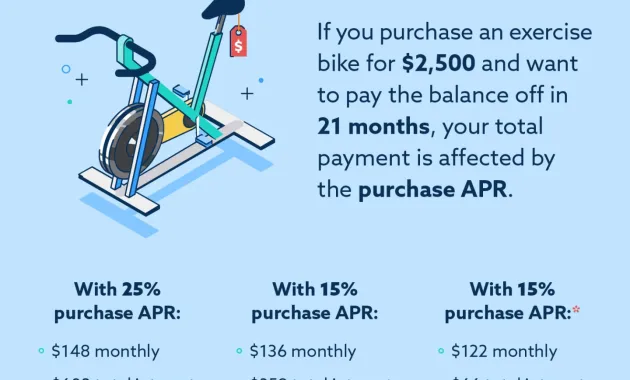
Understanding purchase APR equips you to manage debt responsibly. Here are three practical reasons the figure should be on your radar:
- Cost of Carrying a Balance: Even a modest APR can add up quickly if you consistently carry balances.
- Impact on Credit Utilization: High interest can discourage paying down balances, which in turn may affect your credit utilization ratio.
- Decision‑Making Tool: When comparing cards, the APR can be a decisive factor, especially if you anticipate carrying a balance.
If you’re interested in how other aspects of credit‑card management interact with APR, you might explore our guide on why a credit card may be declined. That article explains additional factors—such as fraud alerts and credit limits—that can affect your overall experience.
Strategies to Reduce or Avoid Purchase APR Costs
While the most straightforward method to eliminate purchase‑APR charges is to pay the full balance each month, not everyone can do that consistently. Below are actionable tactics to keep interest under control.
1. Leverage the Grace Period
Most cards grant a grace period—usually 21–25 days—between the purchase date and the due date. If you pay the statement balance in full before the due date, interest never accrues on new purchases.
2. Choose Cards with Lower APRs for Balance Transfers
If you already carry a balance, transferring it to a card with a lower purchase APR (or a 0% promotional rate) can provide immediate savings. Be mindful of balance‑transfer fees, which typically range from 3–5% of the transferred amount.
3. Monitor Variable APR Changes
Since variable APRs track the prime rate, staying aware of Federal Reserve announcements helps you anticipate rate adjustments. Setting up alerts through your online banking portal can keep you informed.
4. Optimize Your Credit Score
Improving your credit score can qualify you for cards with more favorable APRs. Strategies include paying bills on time, reducing existing debt, and limiting hard inquiries.
5. Use Rewards Strategically
Some cards offset higher APRs with valuable rewards. If you can pay the balance in full each month, the rewards may outweigh the interest cost. For an in‑depth look at maximizing benefits, see our piece on Wells Fargo Autograph Card benefits.
Common Misconceptions About Purchase APR
Even seasoned credit‑card users sometimes hold inaccurate beliefs about APR. Clarifying these myths can prevent costly mistakes.
Myth 1: APR Is the Same as the Interest Rate
While related, APR includes certain fees (like annual fees) in its calculation, offering a more comprehensive cost measure.
Myth 2: A Low APR Guarantees Low Total Cost
If a card carries high annual fees or limited rewards, the overall expense may exceed that of a higher‑APR card with better perks.
Myth 3: Promotional 0% APR Means No Cost Forever
Promotional rates expire. Once the period ends, the regular purchase APR applies, often at a higher rate than initially advertised.
How to Read the APR Disclosure on Your Card Agreement
The APR section of a credit‑card agreement follows a standardized format, but it can still be dense. Here’s a quick checklist to decode it:
- Variable APR Range: Look for a range (e.g., 15.99%–22.99%). Your actual rate falls somewhere within that span.
- Introductory APR: Note the length (e.g., 0% for 12 months) and the post‑introductory rate.
- Penalty APR: Identify the trigger (late payment, default) and the maximum rate, which can be substantially higher.
- Method of Calculation: Confirm whether the issuer uses daily or monthly compounding.
Understanding these details helps you anticipate how interest will accrue and under what circumstances it could spike.
Impact of Purchase APR on Long‑Term Financial Planning
For individuals planning major purchases—such as a home renovation or a new vehicle—credit cards can provide short‑term financing, but the APR determines whether this approach is financially prudent.
Consider a scenario where you finance a $5,000 home‑improvement project using a credit card with a 22% purchase APR. If you spread payments over 12 months, the interest alone could approach $500, raising the effective cost to $5,500. In contrast, a personal loan with a 9% APR would result in roughly $225 in interest, saving you $275.
Integrating APR considerations into your budgeting process ensures you allocate funds efficiently and avoid unnecessary debt buildup.
Tools and Resources for Monitoring Purchase APR
Modern banking platforms offer several features to keep you on top of your APR:
- Online Account Dashboards: Many issuers display your current APR prominently on the home screen.
- Rate Alert Services: Set up email or SMS alerts for any APR changes.
- Credit‑Card Comparison Websites: Use these tools to evaluate APRs side by side, factoring in fees and rewards.
If you’re new to setting up online accounts, our article on first‑time login and account setup provides a step‑by‑step guide to navigating your issuer’s portal.
Future Trends: How Purchase APR May Evolve
Regulatory bodies continue to scrutinize credit‑card pricing practices. Potential developments include:
- Caps on Variable APRs: Some legislators propose limiting how high variable rates can climb.
- Enhanced Transparency Requirements: More detailed breakdowns of how APR is derived could become mandatory.
- Integration with FinTech Solutions: Real‑time APR adjustments based on personal spending habits may emerge.
Staying informed about these trends will help you adapt your credit strategy as the marketplace evolves.
In summary, the purchase annual percentage rate is a pivotal figure that shapes the cost of borrowing on a credit card. By understanding its definition, calculation, and the factors influencing it, you can make smarter choices—whether that means selecting a card with a lower APR, taking advantage of grace periods, or strategically using promotional rates. Armed with this knowledge, you can keep interest expenses under control, protect your credit health, and align your card usage with broader financial goals.