Table of Contents
- Types of Low Interest Credit Cards
- Standard Low‑APR Cards
- 0% Introductory APR Cards
- Hybrid Cards with Low Ongoing APR and Rewards
- Key Features to Evaluate
- Annual Percentage Rate (APR) Structure
- Introductory Period Length
- Fees and Charges
- Credit Limit Considerations
- How to Choose the Right Low Interest Card
- Assess Your Current Debt Situation
- Calculate the Break‑Even Point
- Match Card Features to Lifestyle
- Check Eligibility Requirements
- Top Low Interest Credit Card Options in 2024
- 1. Capital One Quicksilver Cash Rewards
- 2. Discover it® Cash Back
- 3. Citi® Diamond Preferred Card
- Best Practices for Managing a Low Interest Card
- Pay More Than the Minimum
- Set Up Automatic Payments
- Monitor Your Credit Utilization
- Reassess Periodically
Low interest rate credit cards have become a cornerstone for consumers looking to manage debt without incurring hefty finance charges. In today’s market, where APRs can climb above 20%, finding a card that offers a modest rate can make a noticeable difference in monthly budgets. This article walks you through the landscape of low‑interest credit cards, explains why they matter, and provides a roadmap for selecting the best fit for your situation.
Imagine a family that carries a balance of $5,000 on a standard card with a 22% APR. Over a year, the interest alone can exceed $1,000, reducing the amount they can put toward principal repayment. By switching to a card with a 12% APR, the same balance would generate roughly $540 in interest, freeing nearly $460 for other financial priorities. This simple arithmetic illustrates the power of low‑interest options, especially when you combine them with responsible payment habits.
Beyond the raw numbers, low interest cards often come with additional features such as introductory 0% APR periods, balance transfer promotions, and flexible repayment plans. Understanding how these components interact can help you avoid common pitfalls and maximize the benefit of a cheaper rate. Below, we explore the key categories of low‑interest cards and the criteria you should weigh before applying.
Types of Low Interest Credit Cards
Not all low‑interest cards are created equal. The market offers several distinct products, each designed for specific consumer needs. Recognizing these variations ensures you select a card that aligns with your spending patterns and debt‑management goals.
Standard Low‑APR Cards
These cards maintain a consistently low APR on purchases, cash advances, and balance transfers throughout the life of the account. They are ideal for users who plan to carry a modest balance and prefer predictable costs. Typical rates range from 10% to 15% APR, well below the national average.
0% Introductory APR Cards
Many issuers offer an introductory period—often 12 to 18 months—during which purchases or balance transfers incur no interest. After the promo ends, the rate reverts to the standard APR, which may still be relatively low. This structure can be advantageous for large, one‑time purchases or consolidating higher‑interest debt.
For a deeper dive into how introductory offers work, see our guide on 0% APR balance transfer strategies.
Hybrid Cards with Low Ongoing APR and Rewards
Some cards blend a modest APR with rewards programs, such as cash back on everyday purchases. While the APR may be slightly higher than a pure low‑interest card, the added value from rewards can offset the cost if you pay the balance in full each month.
Key Features to Evaluate
When comparing low interest credit card options, focus on the following attributes to ensure the card truly fits your financial picture.
Annual Percentage Rate (APR) Structure
- Purchase APR: The rate applied to everyday spending.
- Balance Transfer APR: Important if you plan to move existing debt.
- Cash Advance APR: Typically higher; avoid unless necessary.
- Penalty APR: Triggered by missed payments; understand how it is applied.
Introductory Period Length
A longer 0% introductory period gives you more time to pay down balances without interest. However, verify the post‑promo APR to avoid surprises later.
Fees and Charges
- Balance Transfer Fee: Usually 3% to 5% of the transferred amount.
- Annual Fee: Some low‑interest cards waive this fee; others may charge $0 to $95.
- Late Payment Fee: Can add up quickly; set up alerts to stay on track.
Credit Limit Considerations
A higher credit limit can provide flexibility, but it may also encourage overspending. Understanding how issuers determine limits helps you gauge whether a card will meet your purchasing power without prompting risky behavior.
Our article on what is a credit limit and how it is determined offers further insight into this topic.
How to Choose the Right Low Interest Card

Selecting a card is a decision that should be guided by both quantitative analysis and personal circumstance. Below are practical steps to follow.
Assess Your Current Debt Situation
List all existing credit card balances, their APRs, and monthly payments. Identify which balances carry the highest rates and calculate potential savings if moved to a lower‑rate card.
Calculate the Break‑Even Point
Determine how long it will take to offset any balance transfer fees with the interest savings. For example, a 3% transfer fee on a $3,000 balance equals $90. If the new card saves $150 per year in interest, you break even in about seven months.
Match Card Features to Lifestyle
If you travel frequently, a card that offers travel perks alongside a low APR may be more valuable than a plain low‑interest card. Conversely, if you primarily need to reduce everyday debt, a straightforward low‑APR card without extra frills may be the best fit.
Check Eligibility Requirements
Most low interest cards require good to excellent credit (typically a FICO score of 670 or higher). Review your credit report, address any inaccuracies, and consider pre‑qualification tools before applying.
Top Low Interest Credit Card Options in 2024
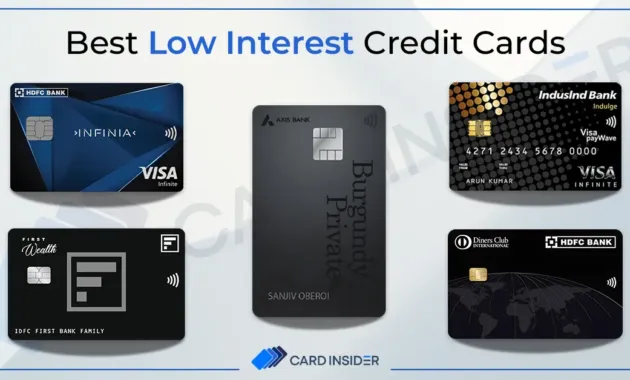
Below is a snapshot of three reputable cards that consistently rank among the lowest APR offerings. While rates and terms can change, these examples illustrate the range of options available.
1. Capital One Quicksilver Cash Rewards
- Purchase APR: 13.24% – 23.24% (variable)
- Annual Fee: $0
- Rewards: 1.5% cash back on all purchases
- Balance Transfer Intro: 0% for 12 months, then 15.24% – 25.24%
2. Discover it® Cash Back
- Purchase APR: 12.99% – 22.99% (variable)
- Annual Fee: $0
- Rewards: 5% cash back on rotating categories, 1% on all other purchases
- Balance Transfer Intro: 0% for 14 months, then 18.99% – 27.99%
3. Citi® Diamond Preferred Card
- Purchase APR: 13.99% – 23.99% (variable)
- Annual Fee: $0
- Balance Transfer Intro: 0% for 21 months, then 15.99% – 25.99%
- Ideal for long‑term balance transfers due to the extended intro period.
For readers interested in store‑specific perks, our piece on store credit cards worth getting outlines how niche cards can complement a low‑interest strategy.
Best Practices for Managing a Low Interest Card
Owning a low‑interest card is only beneficial when paired with disciplined financial habits. Implement the following practices to keep costs low and credit health high.
Pay More Than the Minimum
Even with a lower APR, paying only the minimum extends the repayment timeline and increases total interest paid. Aim to cover the full statement balance each month if possible.
Set Up Automatic Payments
Automating at least the minimum payment prevents late fees and protects you from penalty APRs, which can dramatically raise the cost of borrowing.
Monitor Your Credit Utilization
Keeping utilization below 30% of your total credit limit helps maintain a healthy credit score, which in turn can qualify you for even better rates in the future.
Reassess Periodically
Credit card offers evolve. Review your card’s terms annually to see if a newer product with a lower APR or better rewards has entered the market.
By following these steps, you can leverage low interest credit card options not just as a debt‑reduction tool, but as a component of an overall financial strategy that supports savings, investment, and long‑term stability.
In summary, low interest credit cards provide a pragmatic avenue for consumers to reduce finance charges while maintaining the flexibility of revolving credit. Understanding the nuances of APR structures, fees, and eligibility empowers you to make an informed choice that aligns with your personal financial narrative. As you evaluate options, remember that the cheapest rate is only part of the equation; responsible usage, timely payments, and periodic reassessment will ensure the card serves as a genuine asset rather than a hidden cost.